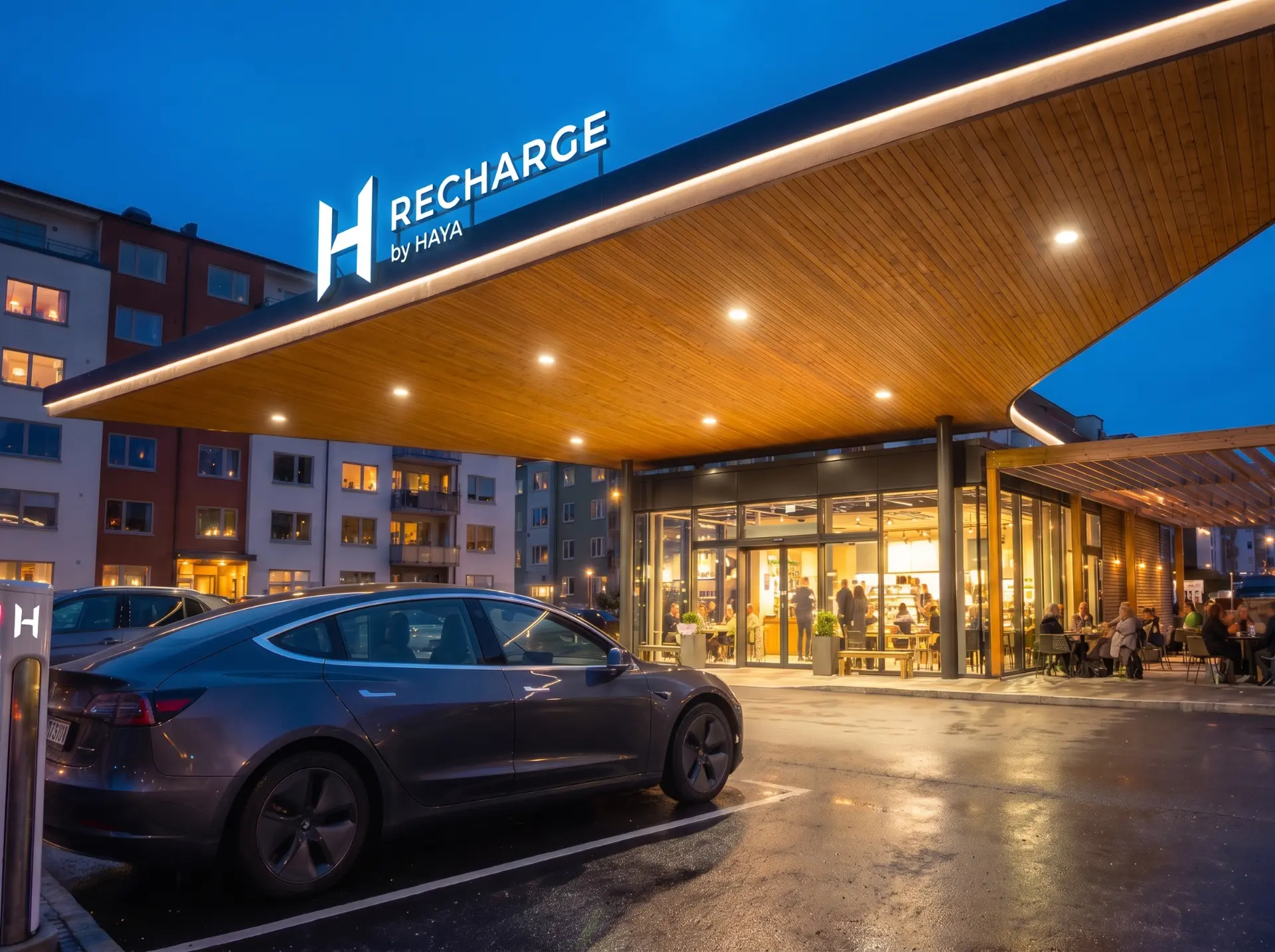
HAYA EXPRESS
Compact corridor charging where the job is speed.
Pakistan is early. That's the point.
Every EV market follows the same sequence: vehicles arrive, charging lags, and adoption stalls until the infrastructure catches up. Pakistan is at exactly that point. Drivers hesitate to go electric because reliable fast charging is scarce; operators hesitate to build charging because the fleet is still young. Whoever breaks that loop doesn't just serve the market; they unlock it.
3,000
Charging stations the government's NEV Policy targets for the network Pakistan needs. The distance between today's sparse coverage and that target is the build-out opportunity.
Government NEV Policy target
2.2M
New energy vehicles the policy anticipates on Pakistan's roads by 2030. Every one of them needs somewhere to charge.
Government NEV Policy target
Rs 23.57/kWh
NEPRA's dedicated electricity tariff for EV charging stations. The regulator has already priced the enabling economics.
NEPRA tariff
Charging is not a feature of Pakistan's EV transition. It is the precondition. Today, it is the bottleneck.
Pakistan's fleet is dominated by motorcycles, so electrification is starting there, and moving quickly. Policy sets the direction; the charging network required to serve it is still early. Infrastructure that serves the whole curve, from two-wheelers to cars, is the position worth holding.
30%
Of new vehicle sales targeted to be electric by 2030.
Government NEV Policy target
2.2M
New energy vehicles targeted on Pakistan's roads by 2030, most of them two- and three-wheelers.
Government NEV Policy target
3,000
Public charging stations called for nationwide by 2030.
Government NEV Policy target
Rs 23.57/kWh
Dedicated electricity tariff for EV charging stations.
NEPRA tariff
~3x
Growth in electric motorcycle sales in 2025, to about 90,000 units.
Industry sales data
Sources: National Electric Vehicle Policy 2025–30, Government of Pakistan; NEPRA EV charging tariff; industry sales data. Figures are policy targets and published data, not HAYA forecasts.
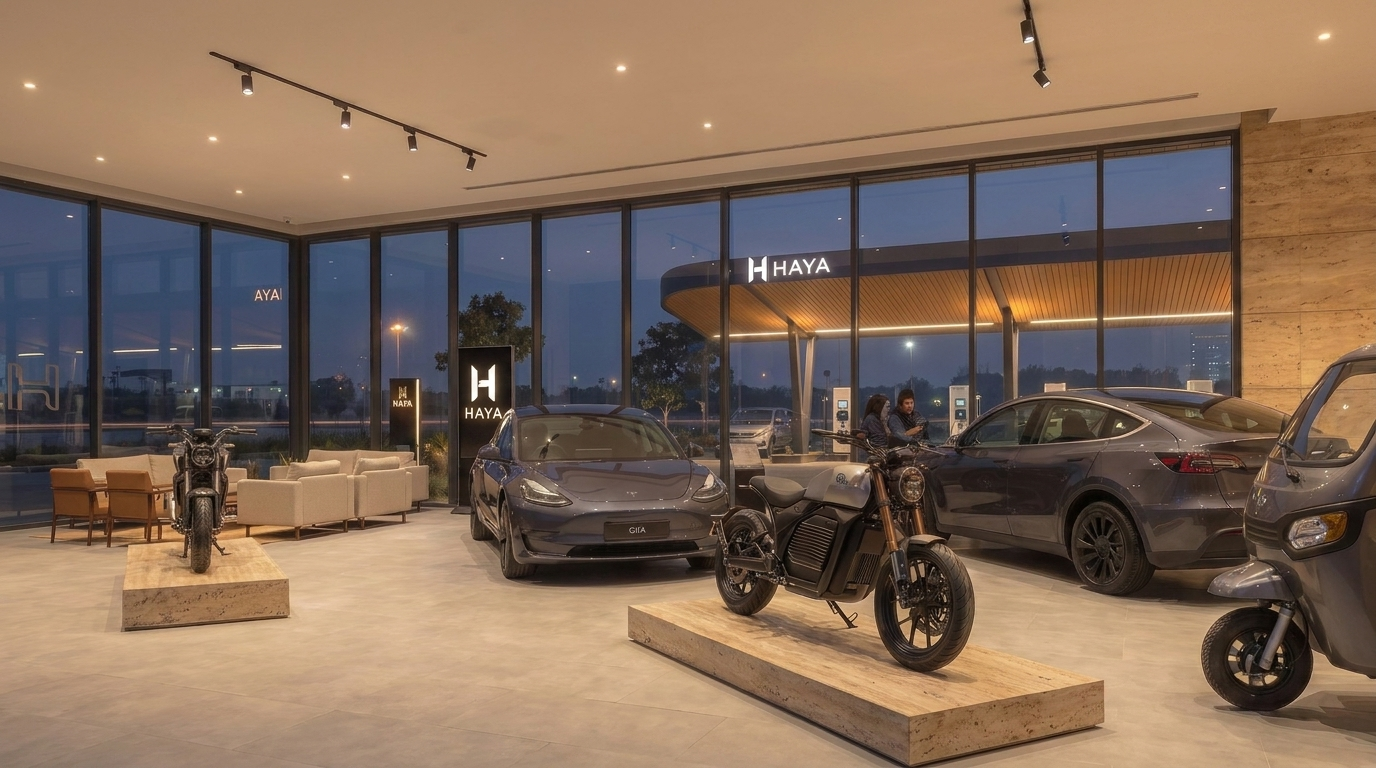
Destination economics: dwell-time revenue alongside charging, designed to lower the utilization each site needs to sustain itself.
Compact corridor charging where the job is speed.
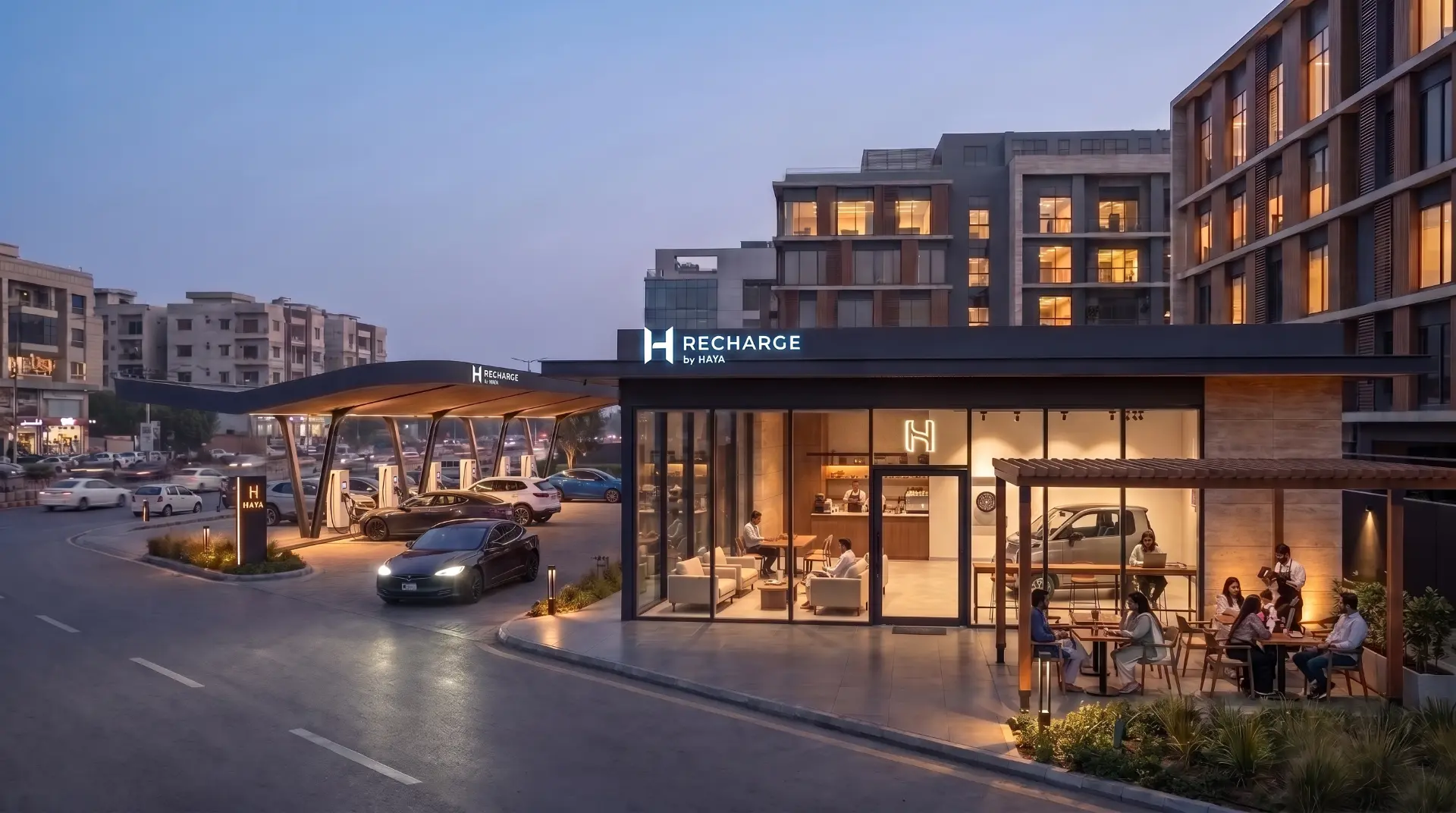
Charging plus café, workspace and EV discovery in the city.
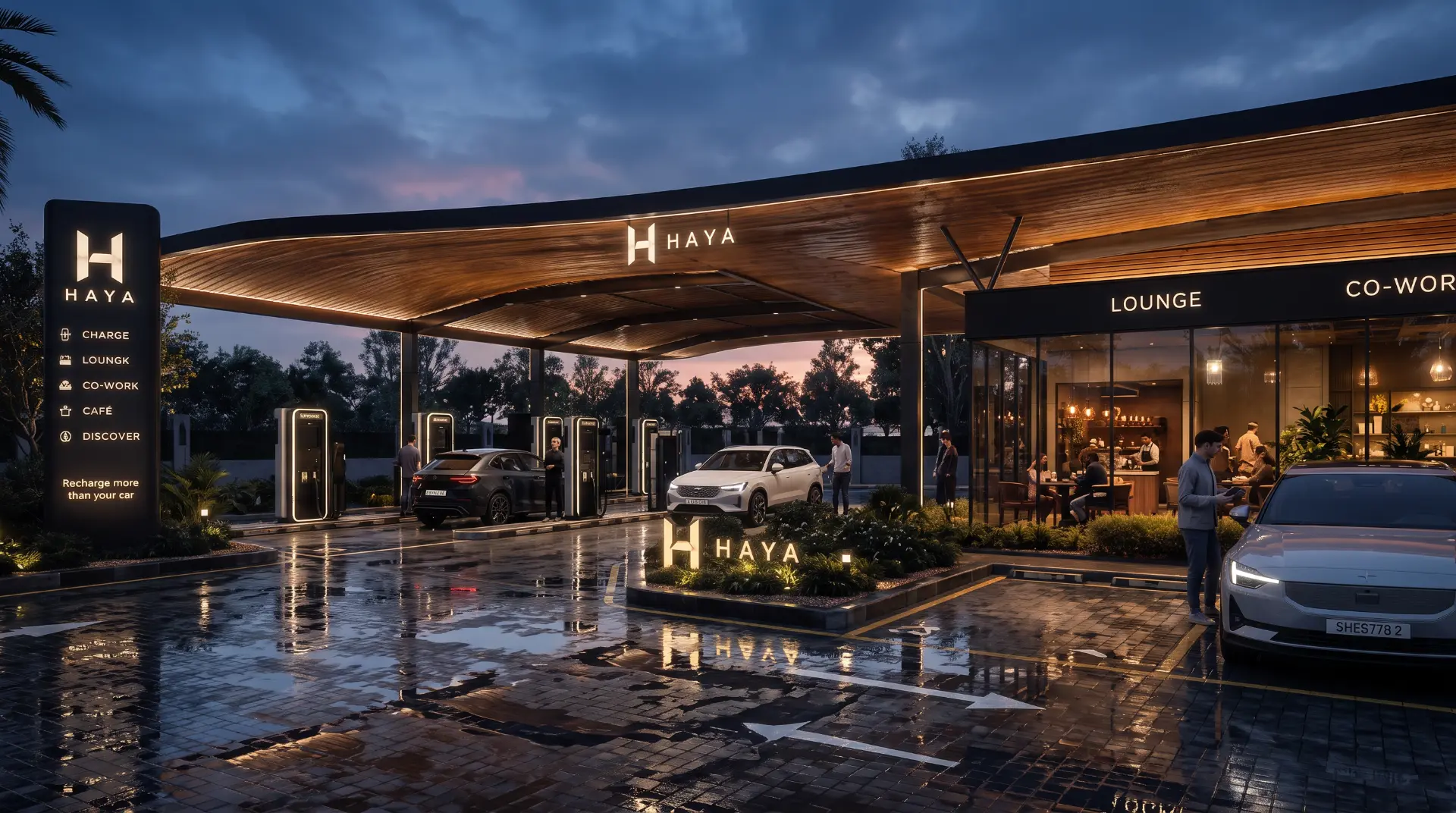
The complete destination, and the format the brand is built on.
Site-level economics, capital plans and returns analysis are shared in investor materials on request.
The classic charging-station model has a waiting problem: revenue depends on EV utilization, and utilization depends on an adoption curve the operator doesn't control. HAYA breaks that dependency. Every HAYA is a destination first. The café, workspace, retail, and site partnerships pay from opening day, so revenue works at today's traffic. Charging then layers on top and compounds as the fleet grows. That is upside on a foundation that already stands.
We designed HAYA so the question is never "when will EV adoption make this site viable?" The destination carries the site, and the electric transition compounds it.
Experience-led
Drivers choose destinations, not plugs. The stop people prefer is the stop that gets used.
Ancillary-first economics
Food, retail and workspace revenue sit alongside charging, rather than behind it.
Corridor-and-city logic
Motorway routes where a stop is required, urban hubs where charging is routine.
Disciplined deployment
Validation-gated rollout. Each format is proven before it is repeated.
Sustainable by design
HAYA sits in the clean-energy infrastructure category. Solar and storage are designed to cut a site's biggest operating cost, electricity, and reduce grid dependence. Sustainability here is economics, not decoration.
Founding amenity partners on board
Fresh Basket for fresh foods, Daftar for co-working and Waisey Matcha for the cafe. The dwell-time offer is being built with operators, not invented from scratch.
HAYA is in development. We are validating locations, developing the founding network and designing the first formats. No location is open, and none is presented as secured.
Tell us your focus and we'll send the materials that match it.